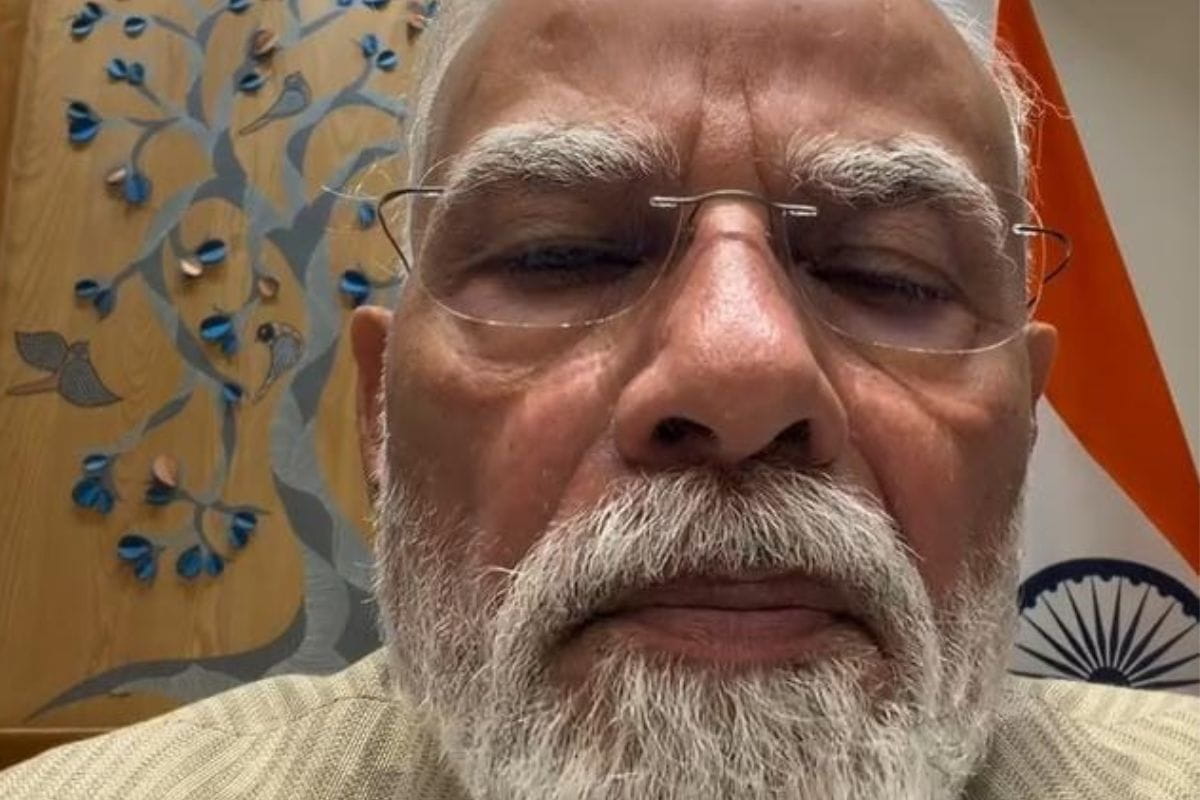
The central government has decided to set up fast-track courts for those involved in paper leak cases, with a pledge to expedite trial and punish them stringently, Prime Minister Narendra Modi announced on Thursday. Modi, in a post on X, referred to the move as a political decision as well as administrative one, saying that nothing is more important than the welfare and future of the nation’s youth. He said that arrangements for fast-track courts had been made and conveyed to the concerned authorities and he ended his message with a strong warning that anyone who interferes with the future of the young generation of the nation will not be spared. Significantly, it was the second time the Prime Minister spoke publicly on the matter in the last two days, as the statement coincided with a wave of student protests throughout the country.
Also Read : PM Modi Announces Fast-Track Courts for Paper Leak Cases Amid Growing Youth Protests

The announcement did not come out of nowhere. It comes after weeks of growing troubles by a youth movement which is one of the biggest challenges for Modi’s government in his third term. The Cockroach Janta Party (CJP), a youth satirical political group started by Abhijeet Dipke, has been holding non-stop protest at Jantar Mantar in New Delhi since June 6, 2026, which has been attended by student groups like the Students Federation of India, the All India Students Association and the All India Students Federation. The protesters have been calling for the resignation of Union Education Minister Dharmendra Pradhan in connection with the 2026 NEET paper leak scandal and other irregularities in the on-screen marking of public exams by the CBSE, as well as for more far-reaching reforms of the way public exams are conducted.
Also Read : CJP Jantar Mantar Protest Escalates As Rahul Gandhi Joins
It’s an unusual name, and it has a specific meaning, as it’s after a statement by Chief Justice of India Surya Kant, who had likened the country’s jobless youth and social media activists to “cockroaches” and “parasites,” respectively. Initiated as an online satirical gesture, it morphed into a large-scale offline protest. The magnitude of the underlying issue is far from trivial, as the NEET paper leak during a national medical school entrance test in May resulted in the reappearance of several students who resit the exam, with the resultant fallout reportedly leading to several students taking their own lives, and the movement also seeking financial compensation for each family affected.

In a significant development, activist Sonam Wangchuk ended his hunger strike on Thursday, ending his 26-day fast in front of Union Ministers J P Nadda and Jitendra Singh along with senior officials of the Apex Body of Leh-Ladakh at Medanta hospital. After a while of “long negotiation on various conditions” and with concerns about possible violence in the country, Wangchuk broke his fast and vowed to share more details in a video. The government then released a video that highlighted the pledges made to Wangchuk: except that the Centre was “highly receptive” not to register cases against those who had protested peacefully, had assured a detailed discussion in Parliament on the NEET paper leak and broader education reforms, and was “highly receptive” to helping the families of students who died after taking their own lives. CJP founder Abhijeet Dipke welcomed Wangchuk’s decision, stating that his sacrifice had “awakened the conscience of an entire nation” but had made it clear that the peaceful protest at Jantar Mantar would go on until Pradhan resigns.
Also Read : Dharmendra Pradhan’s First Reaction To Rahul Gandhi Protest
PM Modi’s first X post was followed up by his own video message which came at a late hour, stiffening his resolve to take firmer action. “Work is not over yet”, Modi said in Hindi, saying his top priority for the day was the fast-track court directive. He said that the proposal would be discussed at the meeting of Cabinet on Friday, and a formal bill would be presented in Parliament on Monday. The video message followed growing pressure from CJP leadership, as Dipke pointed out that if Pradhan’s name did not come off of the list, demands for resignation of Modi would only increase. The “strict action” announcement prompted Dipke to respond with a meme about the government’s response, emphasising the movement’s ongoing doubts.
However, fighting is still very strong on the ground, despite the concessions won during the hunger strike. Only days before, on 20 July, on the first day of the monsoon session of Parliament, a gathering of protesters had to fight off police baton charges and tear gas as they tried to march towards Parliament. This protest follows the clashes in July which had caused widespread outrage and calls for restraint from both sides, and Wangchuk had appealed to protesters for peace in the lead up to his fast. The protest also saw solidarity rallies being held in several other cities across India including Mumbai, extending the movement’s reach beyond Delhi.
Though more tangible after Wangchuk’s speedy performance, government engagement has failed to address the core demand. The Health Minister earlier met the movement leaders for a brief discussion and had requested time to consider their demands, including the release of a detained activist and the resignation of Pradhan, a CJP spokesperson said. Pradhan himself had continued to refuse to step down, having previously called protesters, in a televised interview, a “B-team of terrorists” pushing for the division of the country – a contention that was strongly disputed by Dipke. The protesters have also criticized the police for using excessive force to suppress the demonstrations, particularly in the mistreatment of young women during the protests.
In this context, the promised fast track courts in paper leak cases are the most tangible legislative action taken thus far by the government. India already has a mechanism under the Public Examination (Prevention of Unfair Means) Act, 2024 and fast-track courts have previously resulted in convictions, such as a former Punjab and Haryana High Court registrar who was sentenced to five years prison in 2024 for an exam paper leak in 2017. The days ahead will be crucial as the government’s widened response is expected to be put before Parliament next Monday and Cabinet is set to meet on Friday while it is unclear how much further the protests demanding Pradhan’s resignation will go even as the fast of Wangchuk looks set to continue.

My name is Santosh Rana, and I am the Founder and Content Writer at Taza News, where I actively cover Education, Board Exam Results, Admit Cards, Government Jobs, Technology, and Breaking News updates. As the founder of the platform, I am committed to building a trusted digital news source that delivers accurate, timely, and reader-friendly information to audiences across India.