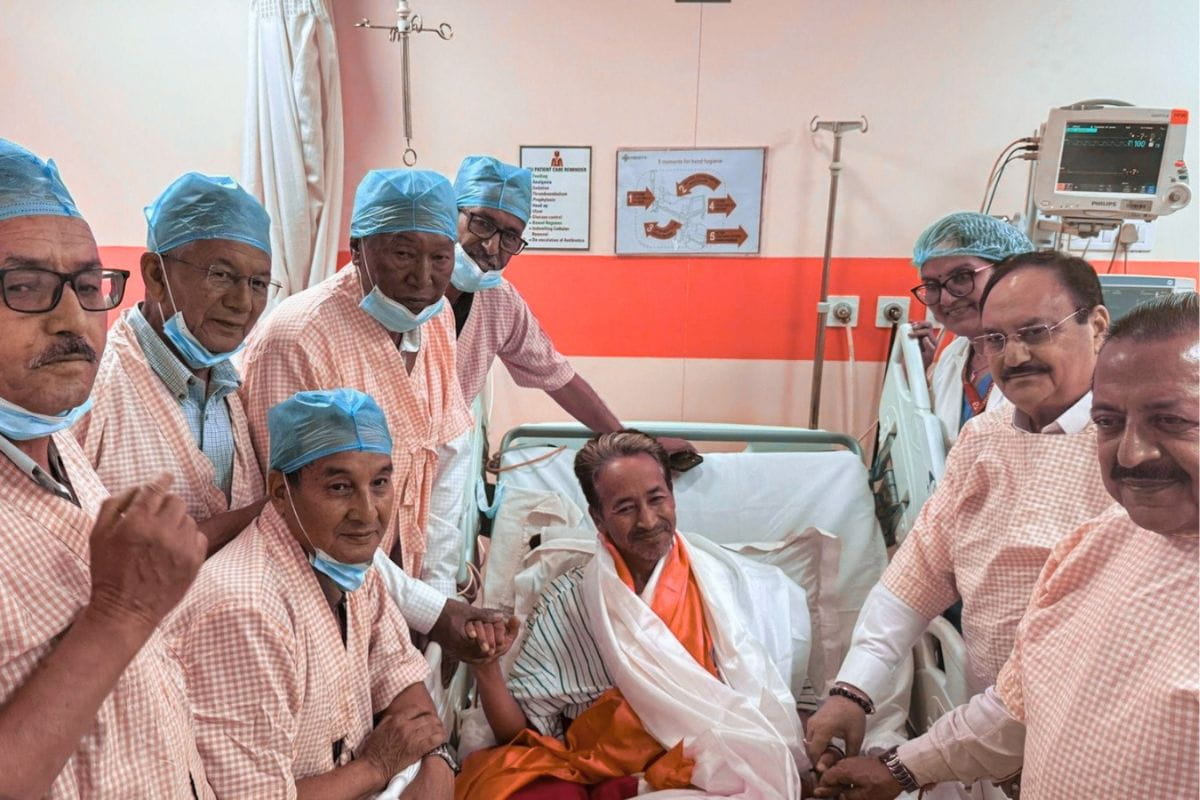
Twenty-six days without food. It was a long time Sonam Wangchuk spent at the centre of one of India’s biggest youth movements in recent memory, and Friday was the day he was able to eat again. However, it has failed to quell the demonstrations as the government had hoped his flash finish would do.
Wangchuk was now symbolizing more than just one protester. The grassroots, satirical website that was a response to a piece of the Supreme Court’s grievance in early June has evolved over the last seven weeks into a national debate on exam fairness and on government accountability, as well as youth unemployment. The spark that lit the fuse was a blunt one: Chief Justice Surya Kant had addressed jobless youngsters as “cockroaches“. The label did not die out as a joke on the internet but, rather, was adopted. Abhijeet Dipke made it into a motion, the Cockroach Janta Party, and it has only continued to grow ever since.
Also Read: Prime Minister Narendra Modi Announces Fast-Track Courts
In the middle of the rage lies the 2026 NEET paper leak, which saw almost two million students taking the medical entrance test once again, and irregularities in the process of marking the on-screen test by CBSE. The repercussions for families who had watched their children for years get ready were devastating, a series of student suicides that now activists refer to over and over in their demands for reimbursement and overhaul.
This was not an accident of Wangchuk’s decision to fast; it was designed to get the attention of the Delhi government to Jantar Mantar, and it did. Police did not help their cause either: they had to be carted into the hospital in the middle of the strike, and it only galvanized the public’s sympathy and attracted more than just students; professionals and families were arriving in solidarity. When he broke his fast on Friday, flanked by the Union Ministers JP Nadda and Jitendra Singh, the protest had become so large that it was no longer a personal affair of his. It was clear later on from Dipke that “We won’t let Sonam sir’s sacrifice go in vain.” He’s clear: the demonstrations will not end.
Also Read: CJP Jantar Mantar Protest Escalates As Rahul Gandhi
The government’s response came in pretty much as soon as that, in time. For the first time, Prime Minister Narendra Modi broke his silence on the protests, writing on X that fast-track courts would be set up for the “paper leak” cases to be prosecuted “swiftly and severely.” He later followed it up with an independent video address, promising that a bill aimed at curbing exam leaks would be presented to Parliament hours later.
Not a single one of them touched down as the government would have liked. Protesters didn’t miss out on pointing out what the announcements did not mention: they said nothing about the resignation of Dharmendra Pradhan, the demand that is actually pushing people into the streets for weeks, and did not offer a definite assurance on compensation for mourning families. In other words, fast-track courts dealt with the crime and not the politics.
Also Read: Dharmendra Pradhan’s First Reaction To Rahul Gandhi Protest
Before Wangchuk’s fast was over, thousands attempted to march on the Parliament on July 20 during the opening of the monsoon session, but were fired at with tear gas and teargassed by the police. It was not before that battle, but after it, that Wangchuk started urging the protesters to maintain the peace, fearing that they could lose the moral momentum of their movement in violence. Pradhan, on the other hand, has been unresponsive in the past; he once called the protesters a “B-team of terrorists,” which Dipke rightly rejected.
The fast-track courts have a precedent of delivering results; a former registrar of the Punjab and Haryana High Court was slapped with five years in a case linked with the leak of the 2017 exam, under the Public Examination (Prevention of Unfair Means) Act, 2024. So the law machine is not a figment of the imagination. But it’s unclear if it will suffice. Wangchuk might not be in a state of fast, but the crowd at Jantar Mantar has not left its presence, and Pradhan’s employment is the only demand that no government official is willing to touch.

My name is Santosh Rana, and I am the Founder and Content Writer at Taza News, where I actively cover Education, Board Exam Results, Admit Cards, Government Jobs, Technology, and Breaking News updates. As the founder of the platform, I am committed to building a trusted digital news source that delivers accurate, timely, and reader-friendly information to audiences across India.