Senior Citizen FD Rates: Compare Top 5-Year Bank Returns Today

Written by: Rashmi

Published on:

Edited By:

Taza News

Google News
Follow Us
Join Our WhatsApp Group

Senior Citizen FD Rates: Fixed deposits are among the most sought-after savings tools for senior citizens, especially when they want to keep their money safe and receive regular interest. For senior citizens, banks have special rates of interest for FD that is generally higher than the normal rate offered by the banks.

They can be a good investment option for those who aren’t looking for the volatility of the markets and want a more consistent yield. However, just the interest rate is not the only factor you should consider before opening an FD. The final maturity amount also will vary according to the investment amount and length, compounding method, and bank rules.

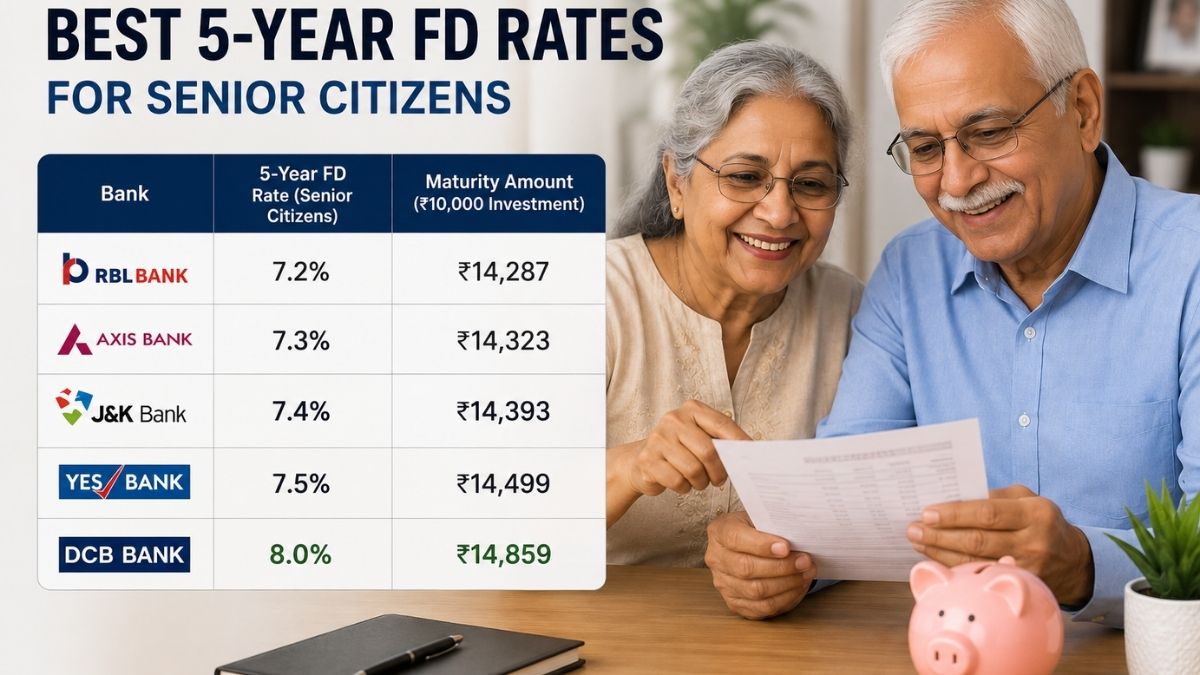
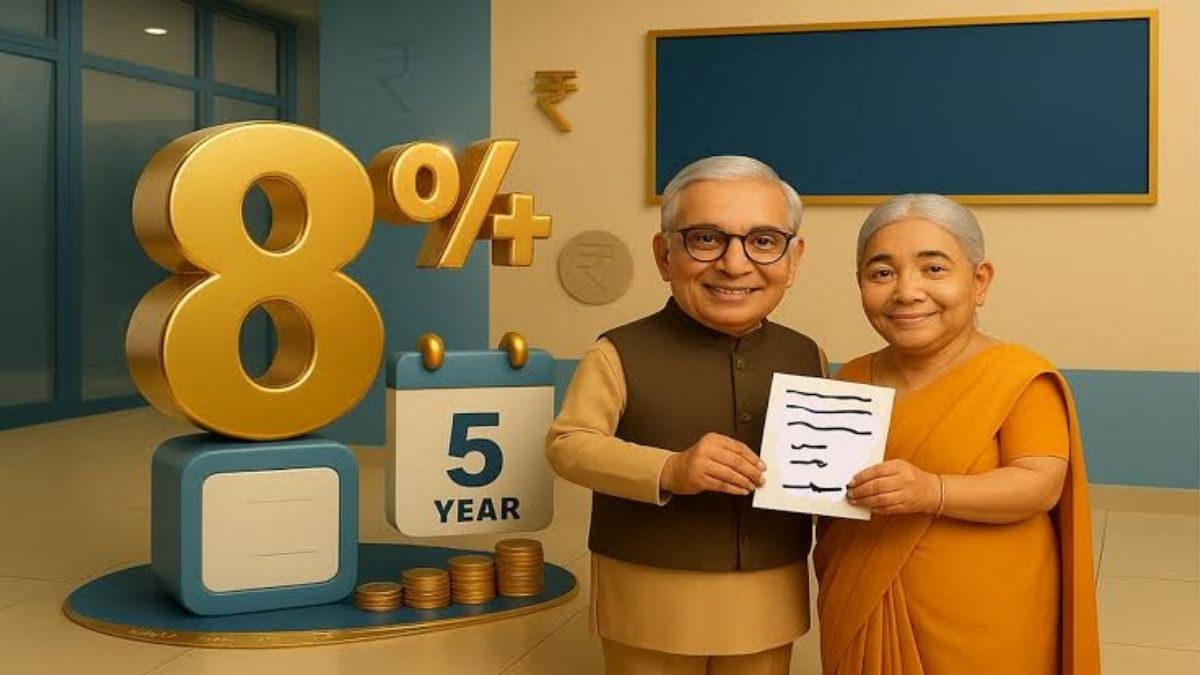
If you are going to make an investment for 5 years, then you should be aware of where you might be able to invest your money and have it make more. The rate quoted in the above information is the highest rate quoted by DCB Bank among the five banks discussed above at 8% per annum.

Why Senior Citizens Get Special FD Interest Rates

Senior Citizen FD Rates. Banks offer an extra interest rate to senior citizens on the qualifying fixed deposits. This added rate is designed to appeal “mature” customers who might be seeking less risk taking with market volatility and more predictable returns from fixed-income products. The extra rate and criteria for this can be different for each bank.

Senior Citizen FD Rates

If someone is seeking a fixed investment period and a fixed return on investment, a five-year FD can be beneficial. Investors should find out, however, if the quoted rate is applicable throughout the five-year period and if the FD is cumulative or non-cumulative. This information can influence the interest payout as well as when it is paid.

RBL Bank Offers 7.2% Interest on 5-Year FD

RBL Bank provides the Senior Citizen with an interest rate of 7.2% per year on its 5 year fixed deposit as per the rates given. With this rate, if a senior citizen invests Rs 10000, the investment will be worth Rs 14287 by the time it matures, according to the information provided in the source.

The final maturity value may differ with respect to the frequency of compounding and the type of FD product chosen by the bank. Thus, investors shouldn’t compare deposits just on the basis of a simple interest calculation. Before making an investment decision, it is important to use the bank’s official maturity calculator or FD terms.

Axis Bank 5-Year FD at 7.3%

According to Axis Bank, the bank advertises a 7.3% interest rate for five-year fixed deposits to senior citizens. If done in this way, the investment of Rs 10,000 is believed to become Rs 14,323 after five years. This small variation from 7.2% rate of return might seem negligible with a Rs 10,000 investment, but can become significant with larger investments.

For instance, if a person invests Rs 1 lakh, he can expect a much larger rupee difference in interest rates than a person investing Rs 10,000. That is why senior citizens should look at the interest rate and the quantum they plan to invest in the FD and not the headline interest rate.


J&K Bank Offers 7.4% Interest

J&K Bank is listed with a 7.4% interest rate for senior citizens on five-year fixed deposits. Based on the figures provided, a Rs 10,000 deposit could reach approximately Rs 14,393 at maturity. This puts the bank slightly ahead of the 7.2% and 7.3% rates discussed above.

Although a 0.1 or 0.2 percentage-point difference may seem small, the impact increases as the principal amount and investment period grow. Senior citizens with larger savings should therefore compare the expected maturity value carefully instead of focusing only on the advertised percentage.

Yes Bank Offers 7.5% Interest on 5-Year FD

Yes Bank is mentioned as offering a 7.5% interest rate on five-year fixed deposits for senior citizens. At this rate, an investment of Rs 10,000 is stated to mature at approximately Rs 14,499 after five years. Among the first four banks discussed, this gives Yes Bank the highest quoted rate.

A higher FD rate can improve the potential maturity amount, but investors should also consider other factors such as premature withdrawal rules, minimum deposit requirements, interest payout options and tax treatment. A slightly higher rate may not always be the only factor that matters when choosing where to keep your savings.

DCB Bank Offers the Highest Rate at 8%

Among the five banks covered in the supplied information, DCB Bank offers the highest stated interest rate, at 8% for a five-year senior citizen FD. A Rs 10,000 investment is estimated to grow to approximately Rs 14,859 over five years at this rate, making it the highest maturity figure among the examples provided.

The difference between 8% and 7.2% may look modest when viewed as a percentage, but it can have a bigger impact on larger deposits. Someone investing a substantial amount should calculate the expected maturity value carefully and compare the complete FD terms before deciding.

5 Important Things Senior Citizens Should Check

Before investing in any five-year FD, it is worth looking beyond the interest rate. The following points can help investors make a more informed comparison:

  • Check the exact senior citizen interest rate applicable to your FD.
  • Confirm whether the FD is cumulative or non-cumulative.
  • Compare the maturity amount instead of looking only at the interest rate.
  • Check the rules and penalties for premature withdrawal.
  • Consider the tax treatment of the interest earned before investing.

5-Year FD Returns Compared

The rates provided show a gradual increase from 7.2% at RBL Bank to 8% at DCB Bank. The following figures give a simple comparison for a Rs 10,000 investment over five years:

Bank Senior Citizen FD Rate Investment Approx. Maturity Value
RBL Bank 7.2% Rs 10,000 Rs 14,287
Axis Bank 7.3% Rs 10,000 Rs 14,323
J&K Bank 7.4% Rs 10,000 Rs 14,393
Yes Bank 7.5% Rs 10,000 Rs 14,499
DCB Bank 8.0% Rs 10,000 Rs 14,859

The figures make one thing clear: DCB Bank has the highest quoted rate and the highest estimated maturity value among these five examples. However, the actual amount received at maturity may depend on the bank’s compounding frequency, FD type and applicable terms, so investors should verify the current details directly with the bank before investing.

Why the FD Rate Matters More on Larger Deposits

The difference between two FD rates may not appear significant when you compare a Rs 10,000 investment. However, senior citizens often invest larger amounts in fixed deposits, particularly when using them as part of a conservative savings strategy. In such cases, even a small difference in interest rates can translate into a meaningful difference in returns over five years.

For instance, the gap between a 7.2% and 8% rate becomes more important when the principal is Rs 1 lakh, Rs 5 lakh or Rs 10 lakh. At the same time, investors should avoid choosing a bank solely because it offers the highest rate. Safety, liquidity, premature withdrawal conditions, taxation and the investor’s overall financial needs should also be considered.

Senior Citizen FD Rates

Fixed deposits can be a useful option for senior citizens who want to keep their money in a relatively predictable interest-earning product. Based on the rates and maturity figures provided, DCB Bank stands out among the five banks discussed because it offers the highest quoted five-year FD rate of 8%. Yes Bank follows at 7.5%, while J&K Bank, Axis Bank and RBL Bank are listed at 7.4%, 7.3% and 7.2%, respectively.

FAQs

Q1. Which bank offers the highest 5-year FD rate for senior citizens?
DCB Bank offers the highest listed rate of 8% for seniors.

Q2. What interest rate does Yes Bank offer senior citizens?
Yes Bank offers senior citizens a 7.5% five-year FD interest.

Q3. How much can Rs 10,000 become in DCB Bank FD?
Rs 10,000 could grow to approximately Rs 14,859 after five years.

Q4. What rate does RBL Bank offer senior citizens?
RBL Bank offers senior citizens a 7.2% five-year FD rate.

Q5. Is FD interest taxable for senior citizens in India?
Yes, FD interest is generally taxable according to applicable income-tax rules.

Disclaimer: The interest rates and maturity figures mentioned in this article are based on the information provided for this article and are intended for general informational purposes only. FD rates, eligibility conditions, compounding methods, taxation rules and maturity amounts may change. Investors should verify the latest rates and terms directly with the respective bank before making any investment decision. This article is not financial or investment advice.

Also read:

EPFO Warns 800 Companies, October 31 Deadline for PF Registration

PF Withdrawal New Rules: Know When You Can Withdraw Money

E20 Petrol: Government Considers Premium E10 Fuel Option 2026

Rashmi

I’m Rashmi, an experienced content writer with over 3 years of experience in content creation and online publishing. I have a strong understanding of SEO, Google Discover, and audience-focused content strategies, with a passion for creating engaging and informative content.

For Feedback - tazanews120@gmail.com