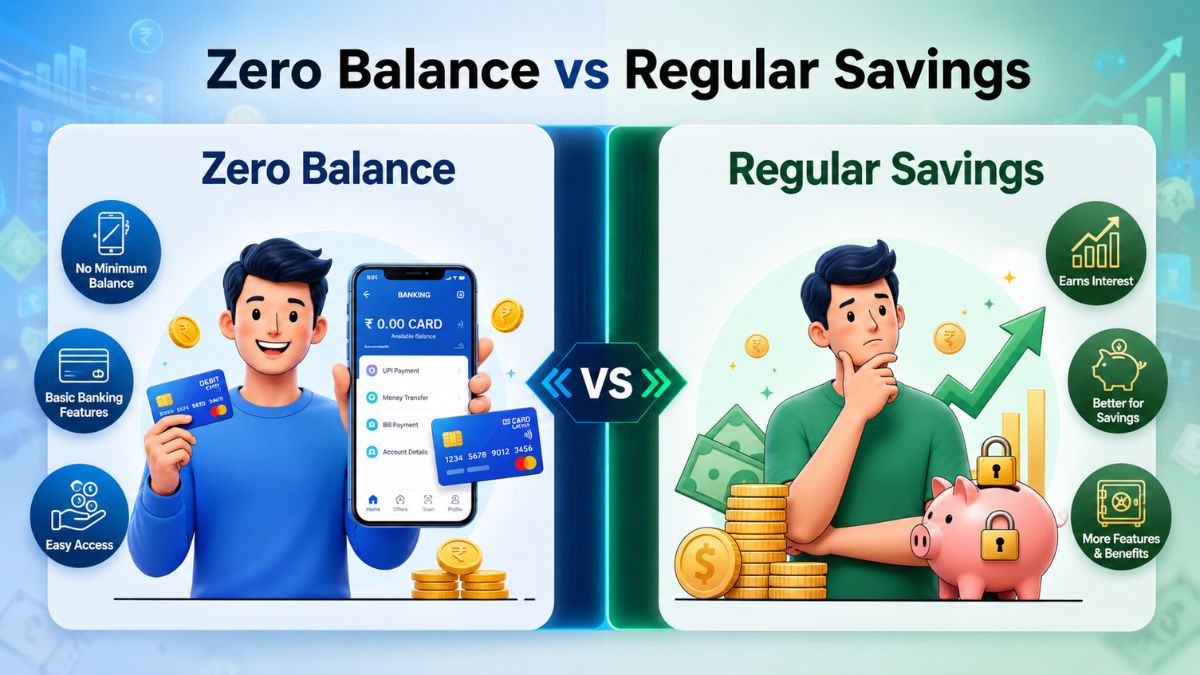
Zero Balance vs Regular Savings Account: While it might seem trivial, picking the right bank account could impact your financial life in a lot of ways. Lenders impose varying requirements on minimum balance, interest, transactions, and service charges. It is essential to be aware of these differences and see which option fits your financial requirements before opening an account.
If you’re someone who doesn’t want to have to keep an eye on a set amount in your bank account, a zero-balance option might be a good fit. A regular savings account, on the other hand, may have more features and might work for those who wish to save and even earn interest. It is essential to know how these accounts operate so that you can make an educated choice.

Zero Balance vs Regular Savings Account
| Feature | Zero-Balance Account | Regular Savings Account |
|---|---|---|
| Minimum Balance | No fixed minimum balance is generally required | May require a specified minimum balance |
| Interest | Depends on the bank and account type | Generally earns interest on the account balance |
| Penalty for Low Balance | Generally not applicable for minimum balance | May apply if the required balance is not maintained |
| Best Suited For | Students, low-income users, and basic banking needs | Regular savers and everyday personal banking |
| Digital Banking | Usually available, depending on the bank | Usually available |
| Debit Card | May be available with applicable charges | Generally available with account-specific charges |
| Service Charges | Other service charges may still apply | Charges depend on the account and services used |
| Account Purpose | Basic banking without minimum balance pressure | Saving money and managing regular expenses |
What Is a Zero-Balance Account?

A zero-balance account is an account in which the customer need not pay a minimum balance into the account. This means that you will not have to pay a penalty if you do not keep a minimum amount in the account unless you have a zero-balance facility in place. These may be of benefit to students, low-income persons, or anyone seeking a basic banking account.
However, a zero balance does not necessarily mean zero charges. Depending on the terms and conditions of the account, banks may still charge fees for some services. A fee may be charged for items like a debit card, cheque book, SMS alerts, and any expenditure above certain amounts. Therefore, customers should always check the bank’s schedule of charges before opening an account.
What Is a Regular Savings Account?
A savings account is generally used by people who wish to save their cash in a bank and gain interest on their balance. These accounts can be utilized for regular tasks like receiving wages or salary, transferring funds, bill payments, cash withdrawals, and digital payments. Depending on the bank and type of account, the customer might get more banking facilities.
One big distinction is that some savings accounts have a minimum balance that needs to be kept. The required amount can vary depending on the bank, account type, and location. Charges may be incurred as per the term conditions of the bank if the required balance is not maintained. It is therefore crucial to know the terms and conditions of an account, including the minimum sum, prior to opening an account.
Key Highlights
- There is no minimum balance for zero-balance accounts.
- Some savings accounts have minimum balance requirements.
- Typically, a savings account pays interest on its deposits.
- Service charges may apply to zero-balance accounts.
- It depends on your income, spending habits, and your banking requirements.
- Zero-Balance vs Regular Savings Account
The biggest difference between the two accounts is the minimum balance requirement. Some options offer a “zero-balance account,” which means the account holder can manage that account without having to keep a certain balance in it; other options may have a minimum balance for a regular savings account. This is appealing to individuals with lots of switching between account balances or an interest in avoiding keeping a reserve simply to satisfy a banking requirement.
Each bank may have variations in features, eligibility, and fees as well. Depending on which account you choose, both offer access to certain services like online banking, mobile banking, debit cards, and fund transfers. You should do a comparison of the terms – don’t take it for granted that all zero-balance or regular savings accounts operate in the same manner.
The documents that are needed to open a bank account are
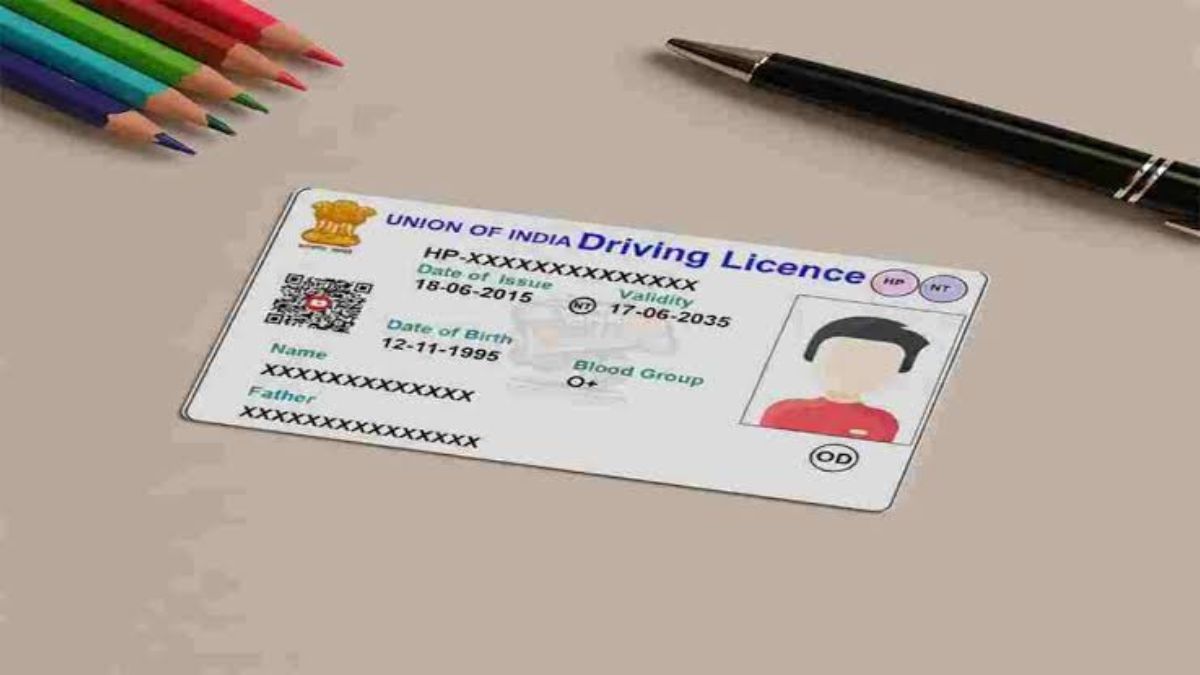
As a rule, banks require their customers to go through the Know Your Customer procedure before they can open an account. Documents commonly accepted as proof of ID and address include Aadhaar, passport, driving licence, or voter ID. PAN details are also usually needed, and a recent photo may be requested when opening an account at a branch.
Depending on the bank, account type, and circumstances of the customer, the exact documentation can differ. A bank might accept other documents or need more information in some cases. If a customer signs up online, he or she may be asked to submit documents electronically and go through the bank’s verification process before the account can be opened.
Current account documents needed
Businesses and customers whose transactions are frequent often use a current account. As a result, banks might require other paperwork that relates to the business when opening these types of accounts. These documents could be a GST registration certificate, Udyam registration, or legal paperwork relating to a company, partnership, or any other business structure.
Specific needs vary by bank and by the types of businesses. A sole proprietor, partnership firm, or company need not submit the same documents. Therefore, before beginning the process of opening a bank account, business owners should review the official requirements of the bank to prevent delays.
Savings Account vs Current Account
The primary purpose of a savings account is to save money and pay regular personal bills. Usually charges interest on the balance, according to the bank’s regulations. The most common accounts are used by salaried staff, students, families, and others to receive income and make normal payments.
A current account is more suitable for businesses that need to manage frequent and high-volume transactions. Unlike savings accounts, current accounts typically do not pay interest on the amount you place in the account. Existing customers might also be entitled to overdraft facilities, depending on the eligibility criteria, limits, and bank conditions.
How to Open a Bank Account Online
It is much easier to open a bank account online since many banks have digital account-opening features on their websites and mobile apps. The customer is able to choose the appropriate account, fill in personal information, and input the necessary KYC data. The process could involve online document verification and Video KYC, depending on the bank.
Once the verification process is completed successfully, the bank can activate the account according to its procedures. The procedure varies from bank to bank, so it is best to check the official bank website or application and not trust links that have been sent by unknown parties. It is also important to carefully review the account’s charges and terms before submitting the application.
Is a Zero-Balance Account a totally cost-free account?
Zero balance is the minimum balance requirement and doesn’t necessarily mean all services are free for that account. A bank can charge a fee for specific facilities and/or services even if there is no minimum balance requirement. The charges may vary based on the kind of account and the services the customer uses.
For instance, some debit card services, cheque books, SMS alerts, or transactions exceeding the account limits may charge fees. Customers should ensure they read the bank’s schedule of charges before opening an account. This can help avoid unpleasant surprises later on, and can help you to understand what you are paying for the account.
Which account will suit you best?
If you are looking for basic banking services without the hassle of a minimum balance, then a zero-balance account may be the right option. It is convenient for students, persons with irregular income, and customers who primarily use an account for receiving and making regular payments.

Both zero-balance and regular savings accounts can be useful, but they serve slightly different needs. A zero-balance account offers greater flexibility because customers do not generally have to maintain a fixed minimum amount. A regular savings account may offer a broader range of features and interest earnings, although some accounts come with minimum balance conditions.
FAQs
Q1. What does a zero-balance savings account mean?
There is no minimum balance that must be kept on a zero-balance account.
Q2. Do banks require a minimum balance in a regular saving account?
There are some regular savings accounts that insist upon a customer having a minimum balance.
Q3. Are zero balance accounts free of charges?
Yes, banks can levy charges on some services and transactions.
Q4. Which is the best account for students?
Students who do not have much income may find a zero balance account to be very convenient.
Q5. Is it possible to open an account for savings online?
Yes, several banks are providing online account opening with Video KYC.
Disclaimer: This is an informational article and does not cover any specific case. The terms and conditions, eligibility, interest rates, minimum balance requirements, and service charges may differ from bank to bank and from account to account. When opening an account, it is always best to refer to the Terms and Conditions found on the bank’s official website and/or with the bank.
Also read:
NRI Fixed Deposit: Calculate Your Earnings on ₹5 Lakh and ₹10 Lakh in SBI and PNB
RBI Assistant Mains Result 2026 Date: Big Update, Expected Cut-Off & Merit, List

My name is Santosh Rana, and I am the Founder and Content Writer at Taza News, where I actively cover Education, Board Exam Results, Admit Cards, Government Jobs, Technology, and Breaking News updates. As the founder of the platform, I am committed to building a trusted digital news source that delivers accurate, timely, and reader-friendly information to audiences across India.