E20 Petrol: Government Considers Premium E10 Fuel Option 2026

Written by: Rashmi

Published on:

Edited By:

Taza News

Google News
Follow Us
Join Our WhatsApp Group

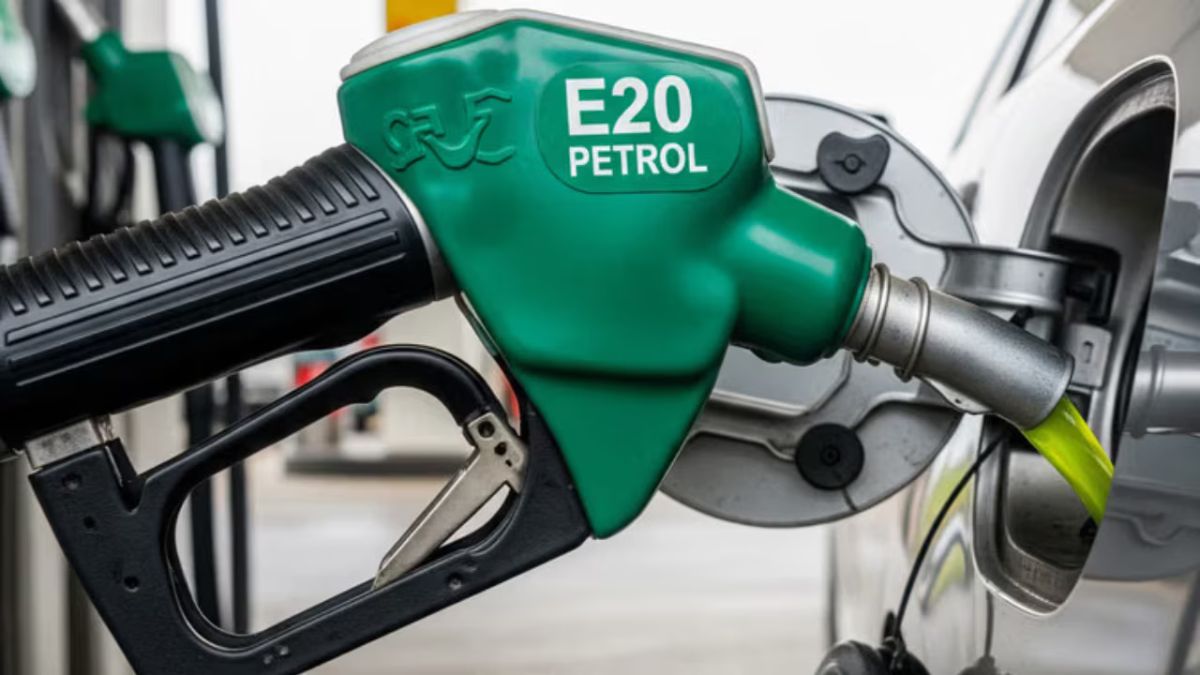
E20 Petrol has entered a debate again, as the issue of mileage, engine compatibility, and fuel selection continues to be an issue for vehicle users. E20 petrol, which has 20% ethanol mixed in with petrol, is an important component of the fuel transition in India. Older car owners, however, have asked if increasing ethanol levels will impact fuel economy and longevity of the vehicle.

With all this in mind, the government is reportedly even considering the possibility of providing premium branded fuels like Speed and Power95 and XP95 in E10. This would provide drivers with an additional fuel choice, but without oil companies needing to install separate E10 infrastructure across all petrol stations. The talks are still in their infancy and have not resulted in an official announcement.

E20 Petrol

Feature E10 Petrol E20 Petrol
Ethanol Content 10% ethanol 20% ethanol
Petrol Content 90% petrol 80% petrol
Octane Option Discussed Premium E10 may offer 95 octane Available in E20 formulations
Main Consumer Concern Lower ethanol blend Mileage and compatibility concerns
Current Discussion Premium E10 option under consideration Existing higher-blend fuel option

Government Considers Premium E10 Petrol
E20 Petrol

The Petroleum Ministry is currently considering the introduction of a premium petrol that has a lower ethanol blend with state-owned oil marketing companies such as Indian Oil, Bharat Petroleum and Hindustan Petroleum. The concept being proposed is to provide an E10 blend of 95-octane petrol and effectively a premium ‘E10′ fuel option for consumers.

The plan is put forward amid worries over the use of E20 petrol by consumers. However, it is important to note that these discussions have not resulted in a confirmed policy change yet. Whether it would be viable and acceptable in the marketplace is still under review by the government and oil companies.

What Is E20 Petrol?

E20 is a type of petrol that is 20% ethanol and 80% petrol. India’s fuel policy has been in place with ethanol blending for several years, and the country has been gradually adding ethanol to petrol as part of its energy policies.

The ethanol-blending programme started on a much smaller scale. The information available indicates that ethanol blending was introduced in India in 2001 and E5 petrol in 2006. The average blending level was about 1.53% during 2013-14 but has significantly improved since then.

What is the reason behind the return of E10 Petrol?

Much of the re-fixation on E10 relates to worries voiced by some car owners about using E20. Older automobiles have raised questions about potential changes in mileage and compatibility, and some drivers are seeking an alternative fuel that’s lower in ethanol.

One potential solution to this problem would be a premium E10, which is a blend of ethanol with higher octane fuel. Rather than establish an entirely new class of regular petrol, the idea is for higher-quality 95-octane fuels to be made available as E10.
Key Points About the Proposed E10 Option

  • E20 petrol contains 20% ethanol blended with petrol.
  • E10 petrol contains 10% ethanol blended with petrol.
  • Premium E10 could use a 95-octane fuel formulation.
  • Government discussions with oil companies are still ongoing.
  • No final decision has been announced on the proposal.

E20 Petrol and Vehicle Owners’ Concerns

One of the main concerns surrounding E20 petrol is its possible effect on older vehicles. Vehicle owners have questioned whether engines designed around lower ethanol blends could experience changes in mileage or fuel-system performance after regularly using fuel containing a higher proportion of ethanol.

However, the effect of ethanol-blended petrol can depend on the vehicle, engine design and manufacturer’s specifications. Therefore, motorists should not assume that E20 will have exactly the same effect on every car or motorcycle. Owners should check their vehicle manufacturer’s recommended fuel compatibility before making a decision about fuel use.

Why Premium E10 Could Be Different

The proposed premium E10 fuel would differ from regular E10 mainly through its higher octane rating. A 95-octane petrol can be attractive to motorists whose vehicles are designed or recommended to use higher-octane fuel, while the lower ethanol content could appeal to people concerned about E20.

The proposal could therefore serve two purposes at the same time. It could give consumers a premium fuel option while also responding to demand for petrol with a lower ethanol percentage. Still, whether the option would deliver meaningful benefits for individual vehicles would depend on their engine design and manufacturer’s recommendations.

How Oil Companies Could Offer E10

One practical challenge is the infrastructure required to store and dispense different types of petrol. Maintaining separate tanks and dispensing systems for another fuel category could increase complexity and costs for fuel retailers.

Offering premium branded fuels such as XP95, Speed and Power95 in E10 form could provide a possible way around some of these infrastructure concerns. Since these premium fuels already occupy a distinct category, oil companies could potentially explore the feasibility of offering an E10 version without creating an entirely separate standard-fuel network.

What the Government Is Discussing

The Petroleum Ministry is currently holding discussions with Indian Oil, Bharat Petroleum and Hindustan Petroleum about the possible introduction of premium E10 petrol. These discussions are focused on whether such fuel could be technically and commercially feasible while meeting consumer demand.

At this stage, motorists should treat the proposal as an option under consideration rather than an announced policy. There is no confirmed nationwide launch date or final pricing information for premium E10 based on the information currently available.

India’s Ethanol Blending Journey

India’s move towards ethanol blending has developed gradually over the past two decades. The initial experiments began in 2001, followed by the introduction of E5 fuel in 2006. Ethanol blending remained relatively low for several years before increasing more rapidly.

The expansion of ethanol blending has been linked to India’s wider efforts to reduce dependence on conventional petrol and increase the use of domestically produced renewable fuel. E20 represents a much higher blending level than the earlier formulations, which is why the transition has attracted significant attention from motorists.

Will E10 Petrol Return Across India?

It is too early to say whether E10 petrol will return as a widely available alternative across India. The current discussions indicate that authorities and oil companies are examining the possibility of premium E10 fuel, rather than confirming a complete return to the earlier petrol system.

If the proposal moves forward, availability could depend on the final policy, oil-company decisions, and the infrastructure available at individual fuel stations. Consumers should therefore wait for an official announcement before assuming that E10 will soon be available everywhere.

What Should Vehicle Owners Do Now?

Vehicle owners should first check their manufacturer’s fuel recommendations rather than making decisions based only on online discussions about E10 or E20. The owner’s manual can provide useful information about the ethanol compatibility and octane requirement specified for a particular vehicle.

Drivers should also avoid believing unverified claims that E20 petrol will automatically damage every older engine or that E10 is universally better for every vehicle. Fuel requirements vary between models, and the appropriate choice should be based on the manufacturer’s specifications and the fuel available for the vehicle.

E20 Petrol

The government’s consideration of premium E10 petrol could give vehicle owners another choice at a time when E20 fuel has become a subject of debate. The proposal involves offering branded 95-octane fuels such as XP95, Speed and Power95 in an E10 formulation, potentially reducing the need for separate infrastructure dedicated to standard E10 petrol.

Disclaimer: This article is based on the information available in the provided source and is intended for general informational purposes only. The proposed premium E10 fuel option is still under discussion and should not be considered a confirmed government policy or nationwide launch. Fuel compatibility and performance can vary by vehicle, so owners should follow their manufacturer’s recommendations.

Also read:

Zero Balance vs Regular Savings Account: Which One Is Better?

Senior Citizen Card Gujarat: Eligibility, Documents and Apply Online

LPG e-KYC Deadline Extended: Will Your Gas Connection Stop?

Rashmi

I’m Rashmi, an experienced content writer with over 3 years of experience in content creation and online publishing. I have a strong understanding of SEO, Google Discover, and audience-focused content strategies, with a passion for creating engaging and informative content.

For Feedback - tazanews120@gmail.com