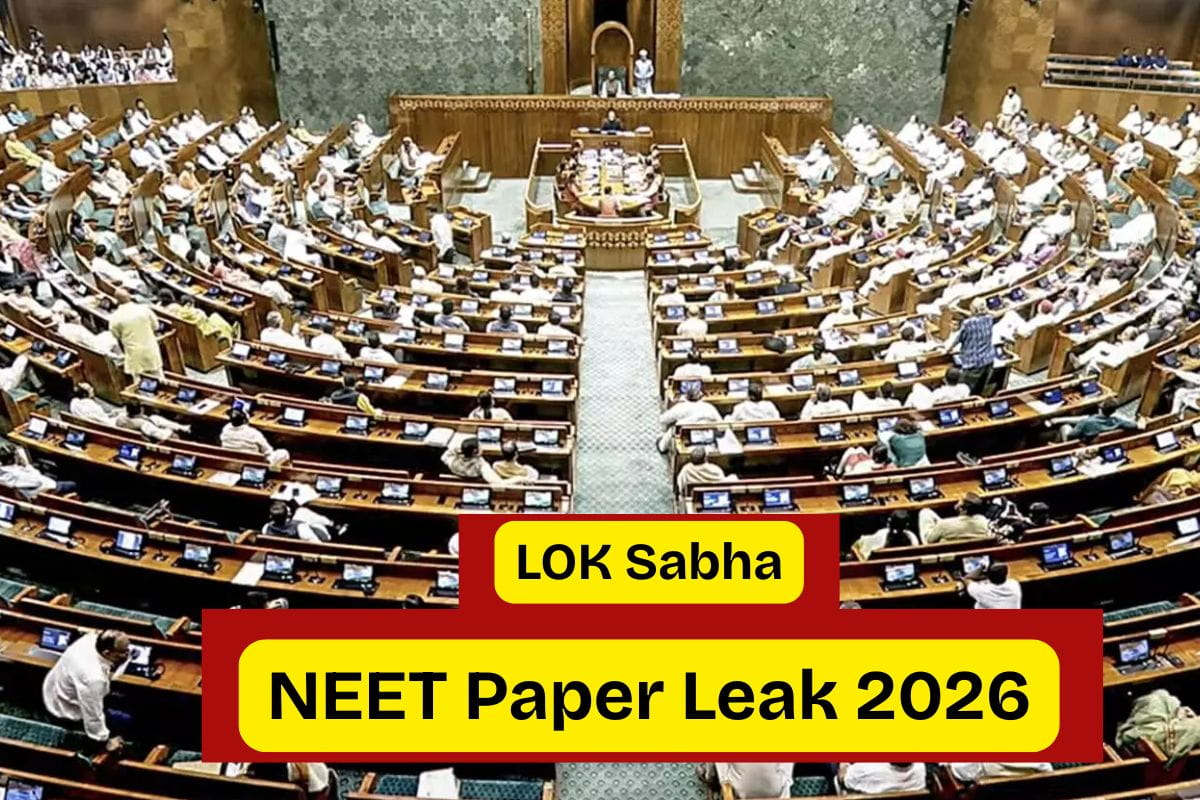
The NEET paper leak 2026 episode and the various other instances of cheating in exams were definitely on the minds of both the Members of Parliament on Wednesday when the Lok Sabha passed the Public Examinations (Prevention of Unfair Means) Amendment Bill, 2026 by a Voice Vote. The law has been drafted to address the public rage over test paper leaks such as the NEET 2026 case, giving rise to an unprecedented outcry among lakhs of students taking the country’s premier medical entrance exam.
The Public Examinations (Prevention of Unfair Means) Act, 2024, is the one that was enacted due to earlier examination security lapses that had to be fixed. However, it was the series of allegations of paper leaks from the last batch of NEETs and the other question paper leaks that got the lawmakers to revisit the framework just two years later. On July 25, the top Union education minister, Dharmendra Pradhan, quit the government after nationwide protests over paper leaks under his watch made it clear that not all the candidates were in the right.

Also Read: Cockroach Janta Party Protest Set To Resume As CJP Demands
NEET has become a focal point of the exam-integrity controversy in India over the past few years as its 2024 edition suffered allegations of leaks leading to litigation in various High Courts and culminating in the Supreme Court. It has been an ongoing issue for some time now: while this bill was being enacted, the Supreme Court ruled on a candidate’s plea challenging six answer keys from a paper leak in NEET UG 2026, and the consequences of a paper leak can last months after it’s cancelled or retaken.
Any individual who is caught using unfair means in a public examination shall be liable to a minimum sentence of three years to a maximum of five years imprisonment under the Public Examinations Amendment Bill 2026, as compared to five years imprisonment from three years earlier. The maximum fine for an individual offender has also been raised from ₹10 lakh to ₹50 lakh, which is ideal for deterring a leak network like the one involved in the NEET paper leak 2026.
Also Read: PM Modi Announces Fast-Track Courts for Paper Leak Cases
The bill also adds more string to the bow of private service providers contracted to conduct examinations, such as the NEET. In addition to that, they have been fined up to ₹5 crore instead of ₹1 crore, and their period of being barred from conducting public exams is now doubled from four to eight years. If any director or senior management official of these companies is found to be in any way responsible, they will now be subject to compulsory minimum prison terms of 5 years and fines of up to ₹5 crore.
The new law will result in more severe sentences for offences that are related to an organised crime group. The minimum jail term has been increased to seven years, and it has been doubled from five years in such cases. The minimum fine is also doubled from ₹1 crore to ₹10 crore. This clause is for syndicates that run leak networks </w:t><w:lastRenderedPageBreak/><w:t>in several states, which is the same type of coordinated paper leak that investigators have identified in previous NEET 2026 paper leak-style controversies.
The bill aims to close the case within 2 months from the time of registration to avoid languishing. The Central Government has also been given the power to establish a Special Task Force for investigation of the offences besides referring the cases to a Central Investigating Agency. Each state/UT shall now designate a Court of Session as a Court of Special Fast Track for these offences in consultation with the jurisdictional High Court and have the trials held day-to-day with a target of three months from the date of filing of the charge sheet.
The framework also includes an appeals process. Appeals arising out of a verdict, sentence or order passed by the Special Fast Track Courts would be directly taken up with the Division Bench of the High Court which is expected to take a decision on the appeals within three months of their admission wherever possible. There is also a specific provision in the law for appeals against bail orders, which have a clear and time-limited appeal process for prosecution and defence.
The changes were made due to a series of question paper leakage incidents, such as the NEET paper leak row, that have undermined trust in a fair examination system in India, the Statement of Objects and Reasons to the bill says. Students and coaching institutes that have been monitoring the aftermath of the NEET UG 2026 paper leak will be hoping that the harsher punishments and speedy courts will contribute to a cleaner and more secure examination process in the future.

I’m Pragya Jain, a content writer with 4 years of experience specializing in the Education sector. I have extensive expertise in covering exam results, government job notifications, recruitment updates, admit cards, answer keys, admissions, counselling, and other education-related updates. My content is based on official notifications and verified sources, ensuring every article is accurate, reliable, SEO-friendly, and easy for readers to understand.