UCC Explained: The Uniform Civil Code, or UCC, has once again become a major topic of discussion in India after Union Home Minister Amit Shah said that the BJP-led NDA governments in all 21 states under its rule would implement the UCC before the 2029 Lok Sabha elections. Shah made the statement in Mumbai on September 13, putting the issue back in the national spotlight.
The proposed code deals with personal civil matters such as marriage, divorce, inheritance, adoption, and related family issues. While India does not currently have a nationwide UCC, Uttarakhand has already implemented its own framework, while other states are moving ahead with legislation or related preparations. So, what exactly is UCC, and what could it mean for ordinary people if more states introduce it?

UCC Explained
| Particular | Details |
|---|---|
| Full Form | Uniform Civil Code |
| Also Known As | UCC |
| Constitutional Reference | Article 44 |
| Main Focus | Personal and family-related civil matters |
| Key Areas | Marriage, divorce, inheritance, succession and adoption |
| Current Status | No single nationwide UCC is in force |
| State That Has Implemented UCC | Uttarakhand |
| Uttarakhand UCC | Implemented in 2025 |
| Recent Political Statement | Amit Shah has said UCC will be implemented in 21 NDA-ruled states before 2029 |
| Religious Practices | UCC primarily concerns civil matters, not worship or religious faith |
| Implementation | Depends on legislation and rules adopted by individual states |
What Is the Uniform Civil Code?
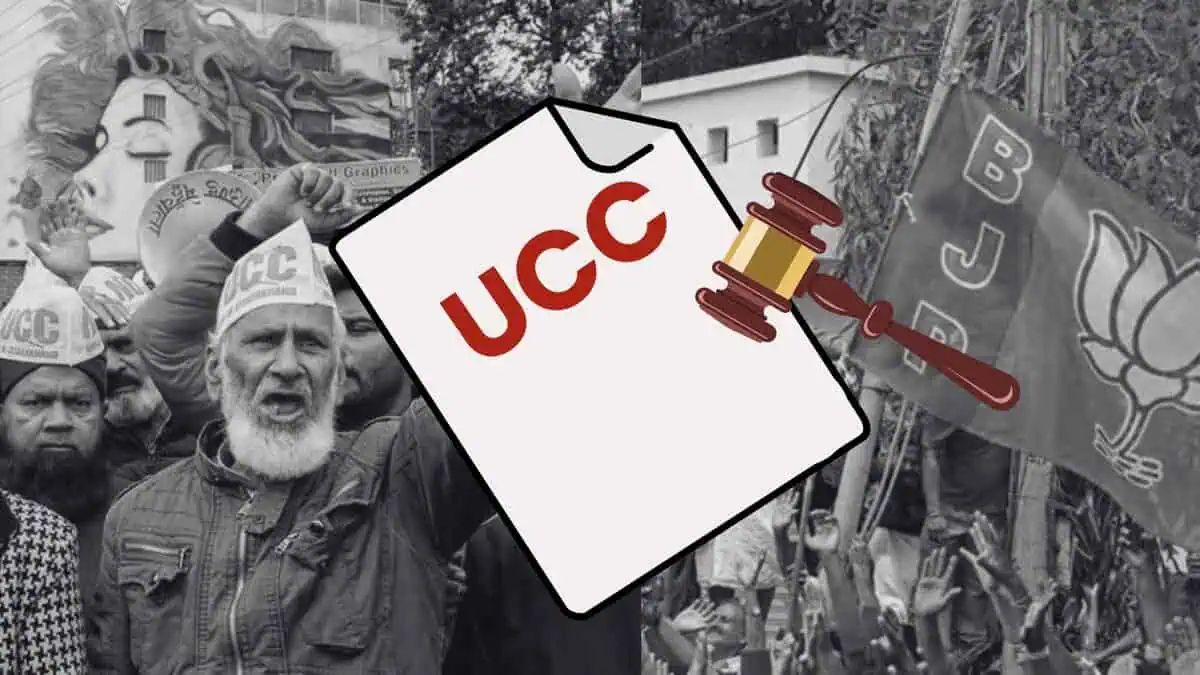
The Uniform Civil Code refers to a common set of civil rules governing personal and family matters regardless of a person’s religion. In simple terms, the idea is to replace different religious personal-law provisions in areas such as marriage, divorce, succession and adoption with a more uniform legal framework. The exact provisions, however, would depend on the law enacted by the relevant government.
UCC does not mean that everyone’s religion, beliefs, worship practices or religious traditions would become the same. Its focus is on civil and personal matters that have legal consequences. Article 44 of the Constitution directs the State to endeavour to secure a uniform civil code for citizens, while subjects such as marriage, divorce, adoption and succession fall within areas where both Parliament and state legislatures can have law-making powers.

Why Is UCC in the News Again?
The latest discussion follows Amit Shah’s September 13 statement that UCC would be implemented in all 21 NDA-ruled states before 2029. The announcement has renewed attention on how individual states could move towards a common civil-law framework rather than waiting for a single nationwide law.
The political debate is likely to continue because UCC touches sensitive questions involving personal laws, religious customs, gender rights and family structures. Different political parties and community representatives have expressed different views on the proposal, while some NDA allies have also called for consultation with stakeholders before implementation.
What Could Change Under UCC?
The biggest possible changes would be seen in areas where personal laws currently differ between communities. Depending on the provisions of a particular state’s UCC, rules relating to marriage registration, divorce, inheritance, succession, adoption and family rights could become more uniform.
For ordinary citizens, this could mean that similar civil matters are handled under the same broad legal framework rather than different rules based on personal law. However, it would be incorrect to assume that every state adopting UCC will have exactly identical provisions. State-specific legislation can contain different rules, exemptions and procedures.
What Could Happen to Marriage and Divorce Rules?
Marriage is expected to remain one of the most important areas affected by UCC-style legislation. A state may establish common requirements for marriage registration, eligibility and related legal procedures. The aim would generally be to provide a clearer framework that applies across communities, although the exact requirements would depend on the legislation adopted by that state.
Divorce and matrimonial disputes could also come under common procedures. This could affect issues such as legal recognition of divorce, grounds for dissolution and related matrimonial rights. Uttarakhand’s existing framework, for example, specifically provides for registration of divorce and nullity of marriage, showing how UCC can create formal procedures for these matters.
What Could Change in Inheritance and Succession?
Inheritance is another major area where UCC could have a direct impact on families. A common civil framework can establish rules for determining legal heirs and distributing property when a person dies without leaving a will. It can also provide procedures related to wills and succession.
Uttarakhand’s UCC framework includes provisions for both intestate succession, which applies when a person dies without a will, and testamentary succession, which concerns property distributed through a will. The state’s official UCC portal provides separate services for declaration of legal heirs and registration of wills.
What About Adoption and Live-In Relationships?
Adoption can also fall within the scope of UCC because it is a civil and family-law matter. A common framework could establish similar legal procedures and rights for people seeking to adopt, although the actual rules will depend on the legislation applicable in each state.
Live-in relationships have also become an important part of the UCC debate because Uttarakhand’s framework specifically provides for registration and termination of live-in relationships. The state’s official portal currently lists services for registering a live-in relationship and recording its termination. This shows that UCC-style legislation can go beyond traditional marriage and divorce rules and regulate other legally relevant family relationships.
Uttarakhand Shows How UCC Could Work
Uttarakhand is currently the clearest example of a state implementing a UCC framework. The state’s official UCC Rules, 2025 cover areas including marriage, divorce, inheritance, adoption and succession. The framework is designed to provide common procedures for personal civil matters across communities within the state’s jurisdiction.
The Uttarakhand model also shows why it is important not to treat UCC as a single nationwide rulebook that automatically applies everywhere. State laws can have their own scope, exemptions and procedures. Therefore, if other states introduce their own UCC laws before 2029, people will need to examine the specific provisions of the law passed in their state.
Key Points to Understand About UCC
- UCC mainly concerns civil and personal matters such as marriage, divorce, inheritance and adoption.
- Article 44 of the Constitution directs the State to work towards a uniform civil code.
- Uttarakhand has already implemented a UCC framework covering several personal-law matters.
- Amit Shah has said the NDA-ruled 21 states will implement UCC before 2029.
- The exact impact will depend on the provisions and exemptions contained in each state’s legislation.
What Could UCC Mean for Common Citizens?
The effect for citizens would depend heavily on the state law that was enacted. The new framework may require a person getting married, seeking divorce, or arranging an inheritance or registering a live-in relationship to comply with procedures set out in it. The biggest change could be the move towards common civil procedures for people belonging to different communities.
However, UCC should not be interpreted as a law which makes all parts of a person’s life the same. Religious ceremonies and customs can be permitted by law in areas where they are permitted, and the legal ramifications of those relationships can be handled under a common civil framework. The distinction is illustrated by the rules of Uttarakhand, which include both legal procedures and customary ceremonies.
What Happens Next on UCC?
The next step is likely to be on what individual states with NDA will do. Recent reports have surfaced of several states already taking steps toward UCC-related legislation, with politics continuing to swirl around the nature and scope of such legislation and what it will look like. Maharashtra Chief Minister Devendra Fadnavis, for instance, has announced that the state would take a step towards UCC once the panel submits its report.
The process may, therefore, vary from state to state. In the process of drafting and implementing their respective frameworks, governments will need to take into account legislation, constitutional provisions, community practices and administrative requirements. The most crucial will be to abide by the last law and official rules that are relevant to their state—rather than just political statements and claims on social media.
The Uniform Civil Code is basically about the uniform legal system for the selected personal and family laws like marriage, divorce, inheritance, succession and adoption. The issue has now come into focus following the announcement by Amit Shah that UCC will be implemented in all 21 NDA ruled states by 2029.
Disclaimer: This article has been written for general awareness and education. The provisions of the UCC may vary from state to state and the laws, rules and implementation procedures might change. The reader is advised to follow the information provided on the Official Government Notifications and in the relevant state legislations, for the latest and legally correct information.
Also read:
UGC NET June 2026 Answer Key Released, Challenge by September 13
CTET Exam Date 2026: New Schedule, Admit Card and Updates
IIT BHU Placement 2026: ₹1.67 Crore Package, 1,228 Offers Revealed

I’m Rashmi, an experienced content writer with over 3 years of experience in content creation and online publishing. I have a strong understanding of SEO, Google Discover, and audience-focused content strategies, with a passion for creating engaging and informative content.