ITR Filing 2026: If you have earned wages, are a business owner, a freelancer, or have received taxable income from a source other than wages, you are required to file an income tax return. This is basically the deal.
Assessment Year 2026-27 refers to returns filed in Fiscal Year 2025-26. Furthermore, contrary to common opinion, there is no one-size-fits-all deadline for everyone this year. The actual due date may differ from that of your neighbour or coworker, depending on the ITR form you use and the sort of taxpayer you are.

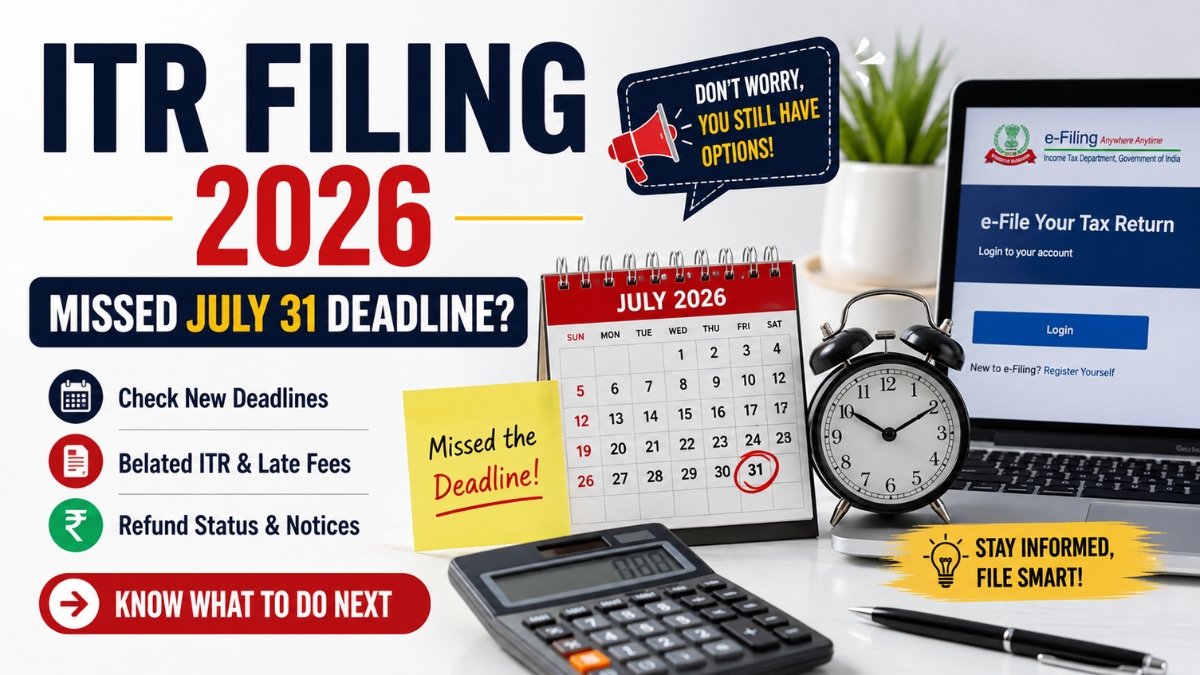
Most individual taxpayers had until July 31, 2026. However, some taxpayers, particularly those who do not need to have their tax returns audited, will have until August 31, 2026. The income.
So, what is the true deadline for ITR 2026?
It is here that all of the confusion is. For AY 2026-27, general individual taxpayers had a due date of 31 July 2026. It’s an important warning for taxpayers and citizens to submit by July, the Income Tax Department said.
However, this isn’t the end of the story. Those who have business/ professional income and also whose accounts do not require an audit and file the right form have until 31 August 2026. This is a later date as per the Department’s own ITR-4 guidelines for AY 2026-27. July 31st is NOT the doomsday for all taxpayers! This is dependent on a person’s form or otherwise.

What for ITR-1 and ITR-2 Filers?
The general due date is 31 July 2026 for ITR-1 and 2. These are usually for those who have a salary, receive pension, and other individual income tax payers, but the forms are not just for these groups.
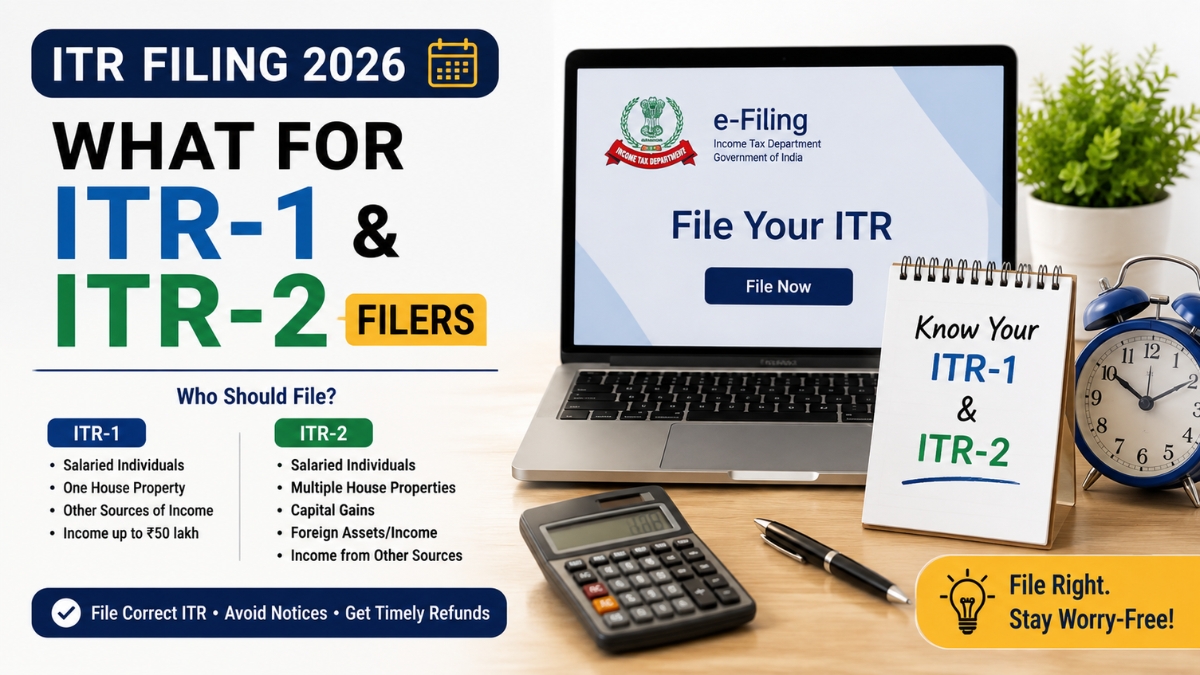
The part people often miss is that your ITR form is not only dependent on your profession or type of employment. It is determined by your income sources, capital gains, house property income, business income, and some other financial information. Choosing the right form before filing is a more important fact that users realise.
The deadline for ITR-3 and ITR-4 Filers has been extended till August 31
Not all those who receive business or professional income are the same. The Income Tax Department stated that ITR-3 is generally applicable for individuals and HUFs having business/professional income, and ITR-4 is applicable to certain eligible individuals/HUFs and firms under the presumptive taxation scheme.
For AY 2026-27, ITR-4’s due date is 31 August 2026. In practice, it could mean that a vast number of freelancers and consultants as well as small business owners may be able to wait until the end of August to make money if they’re eligible. However, the exact deadline depends on the particular circumstances and the applicable tax laws.
Missed the July 31 Deadline? Here’s What to Do
If your initial due date was July 31, 2026, and you haven’t filed yet, don’t worry; there is still a road forward. Eligible taxpayers can submit a Belated ITR. But “belated” does not imply “free of consequences.” Filing late frequently results in a late fee and, depending on the circumstances, interest on any outstanding tax liability.
The Department’s ITR-4 guideline expressly cites these implications when returns are filed after the due date. So, if your deadline has already passed, it is better to file as soon as feasible rather than waiting any longer.
When’s the Last Date for a Belated Return?
For AY 2026-27, the deadline to file a belated return is 31 December 2026. In other words, even if you missed your original due date, there’s still time — as long as you meet the applicable rules and conditions. But waiting until the very last day isn’t a great strategy. The longer you delay, the more the late fee and interest can add up.
What Exactly Is an ITR Refund?
When you’ve paid more tax over the year than your actual liability required, that extra amount coming back to you is what’s called an Income Tax Refund. Here’s a simple example. Say your annual tax liability comes out to ₹50,000, but ₹70,000 got deducted as TDS from your salary over the year.
Once your return is processed and it’s confirmed that ₹20,000 was paid in excess — assuming all the conditions for refund are met — that amount comes back to you.
So ITR filing isn’t just about paying tax. For a lot of people, it’s actually the process through which they get back money that was already deducted unnecessarily.
How to Check Your Refund Status
If you’ve already filed and you’re waiting on your refund, you can track its status online. Here’s how:
- Go to the Income Tax Department’s e-Filing portal.
- Log in with your User ID and password.
- Head to the e-File section.
- Select Income Tax Returns.
- Click on View Filed Returns.
- Choose the relevant Assessment Year.
- Check your filed return and whatever refund details are available there.
For anything refund-related, sticking to the official e-Filing portal is always the safer route — avoid third-party sites or apps promising quicker updates.
Why Might Your Refund Be Stuck?
Sometimes a refund is due, but the money just doesn’t show up in your account when expected. There are a few common reasons behind this:
- Your bank account isn’t pre-validated.
- There’s a mismatch between the name on your bank account and your PAN.
- Incorrect IFSC code or account details were entered.
- The account selected for refund has since been closed.
- There’s an issue linked to your PAN.
- Some mismatch surfaced during ITR processing.
- Verification or another required step on your end hasn’t been completed.
This is exactly why it’s worth double-checking your bank details carefully before you submit your return — a small typo can hold up your refund for weeks.
Why e-Verification Matters After You File
Submitting your ITR isn’t the finish line. You also need to e-Verify your return through the proper channel. If verification doesn’t happen, your return processing can get stuck, and that delay often affects your refund too.
So once you’ve submitted your ITR, log back into your e-Filing account and confirm the return actually shows as verified; don’t just assume it went through.
What Is an Income Tax Notice?
If the Income Tax Department sends you a notice, intimation, or any communication after you’ve filed, that doesn’t automatically mean you’ve done something seriously wrong or committed fraud.
There are plenty of reasons the Department might reach out. For example:
- A mismatch between your ITR and available financial information
- A request for clarification on something specific
- A need for additional information
- Notification of a defect in your return
- Something related to a tax demand or ongoing processing
So rather than panicking the moment you see a notice, read through it carefully first most of the time it’s routine, not alarming.
How to know if you have received a genuine notice or a fake notice
Unfortunately, it is not uncommon to get phishing scams that use the name of the Income Tax Department these days. So if you receive a suspicious email, text or message and it appears to be an official one, you should never click on the link.
In the case of any communication they claim to be from the Department, it’s safer to log in directly to the official e-Filing portal to verify whether a communication has been issued or any action is pending on your account. Do not disclose PAN, bank information, passwords, or OTP to anyone that you do not know; these are never asked for over a call or message by the Department.
Where do notices go to be displayed?
Most communication regarding you or your return will be visible as soon as you log in to the e-Filing portal. Information is typically located in areas such as Dashboard, Pending Actions and e-Proceedings. If a notice requires a response, write down the date indicated, as you may inadvertently miss it and make matters more difficult.
How Do You Respond to a Notice?
In many cases, you can submit your response online. Here’s the general process:
- Log into the Income Tax e-Filing portal.
- Open your Dashboard.
- Go to Pending Actions.
- Open the e-Proceedings section.
- Select the relevant notice or proceeding.
- Read exactly what information the Department is asking for.
- Upload the required response and supporting documents.
- Submit your response following the process laid out.
If the notice involves a complicated tax issue, a large demand, or a disputed transaction, it’s worth bringing in a qualified tax professional rather than trying to handle it alone.
Why You Shouldn’t Ignore a Notice
Not every communication from the Department signals a penalty. But if a notice specifically asks for a response, ignoring it isn’t a good idea. This is especially true for defective returns or clarification requests; these often come with a specific window to respond or correct things, and missing that window can create bigger problems down the line.
So whenever you get a notice, check three things first: Why was the notice issued? Does it actually require a response? What’s the deadline to respond? These three answers will tell you exactly what to do next.
Made a Mistake in Your ITR? Here’s the Fix
If you’ve filed your return and later realise you entered something incorrectly or left out an important detail, you generally have the option to file a Revised Return.
Starting AY 2026-27, the window for revised returns has been extended to the end of the relevant Assessment Year. Per the Department’s guidance, revised returns for AY 2026-27 can be filed until 31 March 2027.
One catch, though if you file the revised return after 31 December 2026 but before 31 March 2027, an additional fee may apply. So if you spot an error, it’s better to fix it sooner rather than pushing it right up to the final deadline.
Things Taxpayers Should Double-Check This Year
Just tracking the deadline isn’t enough this year. It’s worth going through this checklist too:
- Have you picked the correct ITR form?
- Is your salary, business, interest, and other income reported accurately?
- Does everything match what’s shown in your AIS and other available tax information?
- Has your TDS credit been applied correctly?
- Are your bank account details accurate?
- Have you selected the right account for your refund?
- Has your ITR actually been e-Verified successfully?
- Is there any pending notice or e-Proceeding you might have missed?
- If tax is payable, has it been paid on time?
Key Dates for ITR Filing 2026, at a Glance
- 31 July 2026: Original filing deadline for most individual taxpayers.
- 31 August 2026: Deadline for certain non-audit business/professional taxpayers; this is also the due date the Department has set for ITR-4.
- 31 December 2026: General deadline for filing a belated return for AY 2026-27.
- 31 March 2027: Extended deadline for revised returns for AY 2026-27, subject to conditions and applicable fees.
The most crucial thing to realise regarding ITR Filing 2026 is that there is no universally applicable deadline. Your actual due date is determined by your income bracket, ITR form, and applicable tax rules.
If your initial deadline was July 31, 2026, and you have not yet submitted, you can still file a belated ITR. And, for eligible business and professional taxpayers, some cases extend until August 31, 2026; the Department’s own guidance confirms this as the due date for ITR-4 under AY 2026-27.
But filing is only part of the job. Completing e-Verification, keeping an eye on your refund status, and responding to any notice from the Department on time all matter just as much as hitting the deadline itself.
The safest approach, always, is to treat the official Income Tax e-Filing portal as your primary source for anything deadline- or notice-related, and file your return based on what actually applies to your situation, not based on assumptions.
Also Read: NRI Fixed Deposit: Calculate Your Earnings on ₹5 Lakh and ₹10 Lakh in SBI and PNB

My name is Santosh Rana, and I am the Founder and Content Writer at Taza News, where I actively cover Education, Board Exam Results, Admit Cards, Government Jobs, Technology, and Breaking News updates. As the founder of the platform, I am committed to building a trusted digital news source that delivers accurate, timely, and reader-friendly information to audiences across India.