The 8th Pay Commission is gaining a lot of attention from the central government employees and pensioners community due to the prospect of a higher annual increment. In raising certain demands, employee organisations have been talking to the commission, and one of the points is to add more to the annual increment, which currently is 3 per cent, up to 7 per cent.
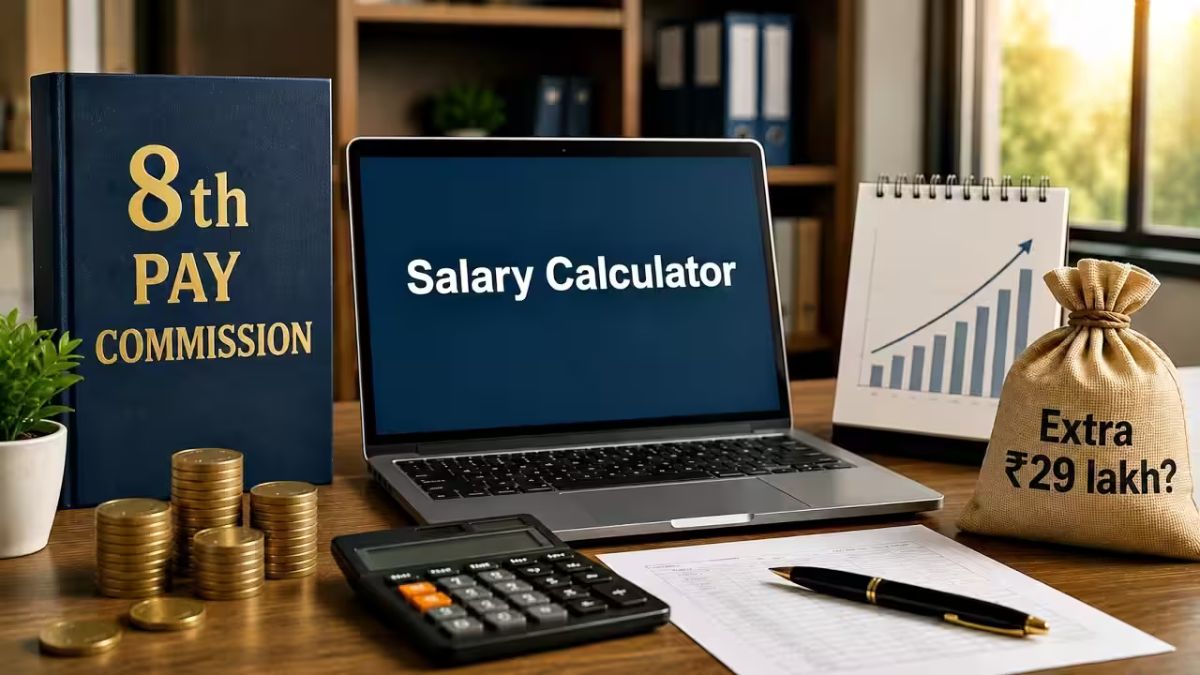
An incremental increase in salary could have a significant impact on the salary over the life of the employee. The benefit can increase step-by-step over time, as each new year’s increment is based on the updated salary. Here comes the much talked of amount of Rs 29 lakh. But it is important to know that it’s just a prediction on the basis of some assumptions (and not a guaranteed payment from the government).

8th Pay Commission
| Year | Projected Annual Salary |
|---|---|
| First Year | Rs 12,28,080 |
| Second Year | Rs 13,14,046 |
| Third Year | Rs 14,06,029 |
| Fourth Year | Rs 15,04,451 |
| Fifth Year | Rs 16,09,762 |
8th Pay Commission Discussions on Annual Increment

During the recent talks with employee and pensioner representatives, various aspects of the upcoming 8th Pay Commission were discussed. Of these, the annual increment was given a special focus. Employees’ representatives feel the current 3% annual increase isn’t sufficient, given the increase in the cost of living and inflation.
Employees’ organisations have, therefore, made a demand for an increased rate. All India New Pension Scheme (AINDPS) employees’ federation reportedly demanded a minimum of 7% annual increment. If it is accepted, the effect this could have on salaries within several years could be significant. The commission, however, will only be able to report the final increment rates after it proposes its recommendations and the government makes its final decision.

Why a Higher Annual Increment Can Make a Big Difference
A 3% or 7% increase might not be a significant change over one year. The actual difference can be seen in a few years. The higher the increment the higher will be the base salary, and the latter years’ increment will be determined by that higher base.
This has a cumulative impact over time. Other parts of salary that correlate with basic pay may also increase as the basic pay goes up. The salary of an employee is therefore affected by these allowances like DA and HRA. The actual benefit, however, would depend on the final structure of compensation and rules on allowances approved under the 8th Pay Commission.
Example of Level 8 Basic Pay
To understand the potential impact, let’s take the example of an employee earning Rs 47,600 as his basic salary and assigned to a Level 8 position. Taking the fitment factor of 2.15 for calculation, the new basic pay should be around Rs 1,02,340.
This is not the official notification of the revised basic pay of Rs 1,02,340 for Level 8. The true figure will depend upon the eventual fitment factor agreed and accepted by the government. DA, HRA and other applicable components would then determine the employee’s overall salary.
How 7% Increment Could Increase Salary
In the case at hand, the employee with a 7% annual raise could make steady annual gains. Based on the above mentioned projection, the salary may be approximately Rs 12.28 lakh in the first year and may be approximately Rs 13.14 lakh in the second year.
The projected annual earnings could continue increasing to around Rs 14.06 lakh in the third year, Rs 15.04 lakh in the fourth year and Rs 16.10 lakh in the fifth year. Just one of these numbers shows you how much more a bigger increase per year can make after a few years.
How the Rs 29 Lakh Additional Income Is Estimated
The Rs 29 lakh figure is linked to a long-term projection rather than a separate bonus or immediate payment. The calculation assumes that an employee receives a higher annual increment and compares the resulting earnings over an extended period with a lower increment scenario.
According to the projection, the difference in cumulative earnings could become substantial over a decade. The calculation also suggests that annual earnings could reach around Rs 1.70 crore in the tenth year under the assumed conditions. However, the exact additional amount will change if the fitment factor, increment rate, allowances or other salary rules are different.
5 Important Points to Remember
- The current annual increment for central government employees is generally 3%.
- Employee organisations are demanding an increase to around 7%.
- A hypothetical fitment factor of 2.15 would take a Rs 47,600 basic salary to about Rs 1,02,340.
- The Rs 29 lakh figure comes from a long-term salary projection, not a confirmed government payment.
- Final salary, arrears and increment benefits will depend on official 8th Pay Commission decisions.
What Happens If Implementation Is Delayed?
The implementation of a new pay commission can take time even after recommendations are submitted. The commission’s report may need to go through government consideration, approval and the notification process before the revised salary structure becomes effective.
If the government decides to apply the revised salary from an earlier effective date, employees could become eligible for arrears for the intervening period. For instance, if implementation is delayed by 20 months but the revised salary is made effective retrospectively, eligible employees could receive arrears for those months. The actual treatment of arrears, however, will depend entirely on the government’s final order.
When Will the Actual Salary Be Known?
It is too early to determine the exact salary employees will receive under the 8th Pay Commission. Several important factors are still unknown, including the final fitment factor, revised pay matrix, increment rate and changes to allowances.
This is why salary figures circulating online should be treated as estimates unless they are backed by an official government notification. A calculation using a 2.15 fitment factor and 7% increment can help explain the possible financial impact, but it should not be mistaken for the final salary structure.
What Employees Should Watch For
Employees should keep an eye on the official recommendations and subsequent government decisions rather than relying solely on viral salary calculations. The most important details will be the final fitment factor, annual increment percentage, effective date and rules for DA, HRA and arrears.
If the proposed 7% increment is eventually accepted, its effect could become significant over a long period because each year’s increase would build on the previous year’s salary. For now, however, the Rs 29 lakh figure remains an illustrative estimate based on specific assumptions and should not be considered guaranteed.
The 8th Pay Commission could bring major changes to the salary structure of central government employees, but the final benefits are still dependent on the commission’s recommendations and the government’s approval. The demand for a 7% annual increment is particularly important because a higher yearly increase could significantly improve long-term earnings.
FAQs
Q1. What is the proposed annual increment under the 8th Pay Commission?
The proposed annual increment could increase from 3% to 7%.
Q2. What fitment factor is used in the salary example?
The example uses an assumed fitment factor of 2.15.
Q3. What is the current basic salary for Level 8?
The example considers a current basic salary of Rs 47,600.
Q4. How much could the Level 8 basic salary become?
It could become approximately Rs 1,02,340 after applying 2.15.
Q5. Is the Rs 29 lakh additional income confirmed?
No, Rs 29 lakh is only a projected estimate.
Disclaimer: The salary figures and Rs 29 lakh additional income mentioned in this article are based on illustrative projections and reported proposals. They are not confirmed government benefits. Employees should wait for the official 8th Pay Commission recommendations and Government of India notification before treating these figures as final.
Also read:
Kisan Credit Card: Get Farmer Loans At Effective 4% Interest
8th Pay Commission: New DA Calculation Brings Relief for Central Employees, Check Details
PM Surya Ghar Green Loan: Get Up to ₹6 Lakh for Solar

My name is Santosh Rana, and I am the Founder and Content Writer at Taza News, where I actively cover Education, Board Exam Results, Admit Cards, Government Jobs, Technology, and Breaking News updates. As the founder of the platform, I am committed to building a trusted digital news source that delivers accurate, timely, and reader-friendly information to audiences across India.