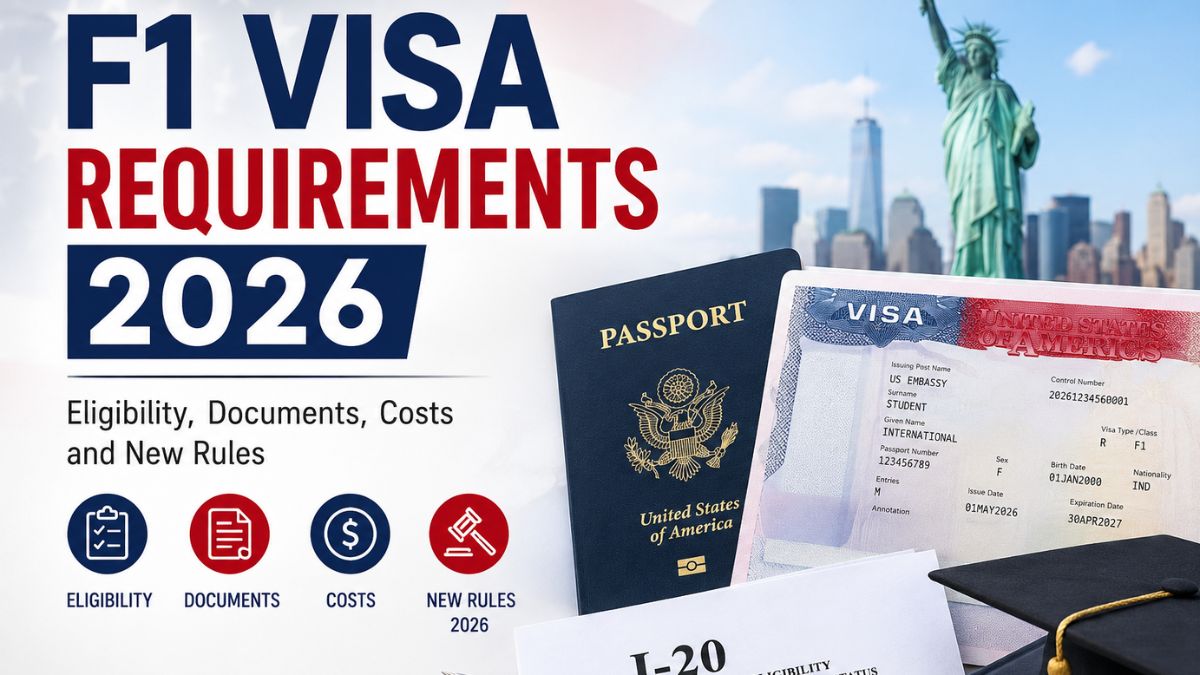
F1 Visa Requirements 2026: Going to the United States in 2026 is not merely about getting into a college or university. International students need to learn about the F-1 visa requirements, such as eligibility conditions, required documents, financial proof, the steps of the application process, and interview preparation. Eligible international students who desire to attend school in the U.S. full-time use the F-1 visa.
Getting the necessary documentation and financial arrangements sorted out before you start the application process can make it much smoother for Indian students and other international applicants. Students should also stay updated on the F1 Visa New Rules 2026, such as changes that might impact applications and student status. Immigration procedures are subject to change; applicants should always check the most up-to-date requirements prior to submitting an application.
What is an F1 Student Visa?
F1 Visa Requirements 2026 is a visa that lets qualified, overseas students attend a qualified educational institution in the United States for full-time academic studies. It is widely used for students following undergraduate, postgraduate, and other eligible academic programmes.
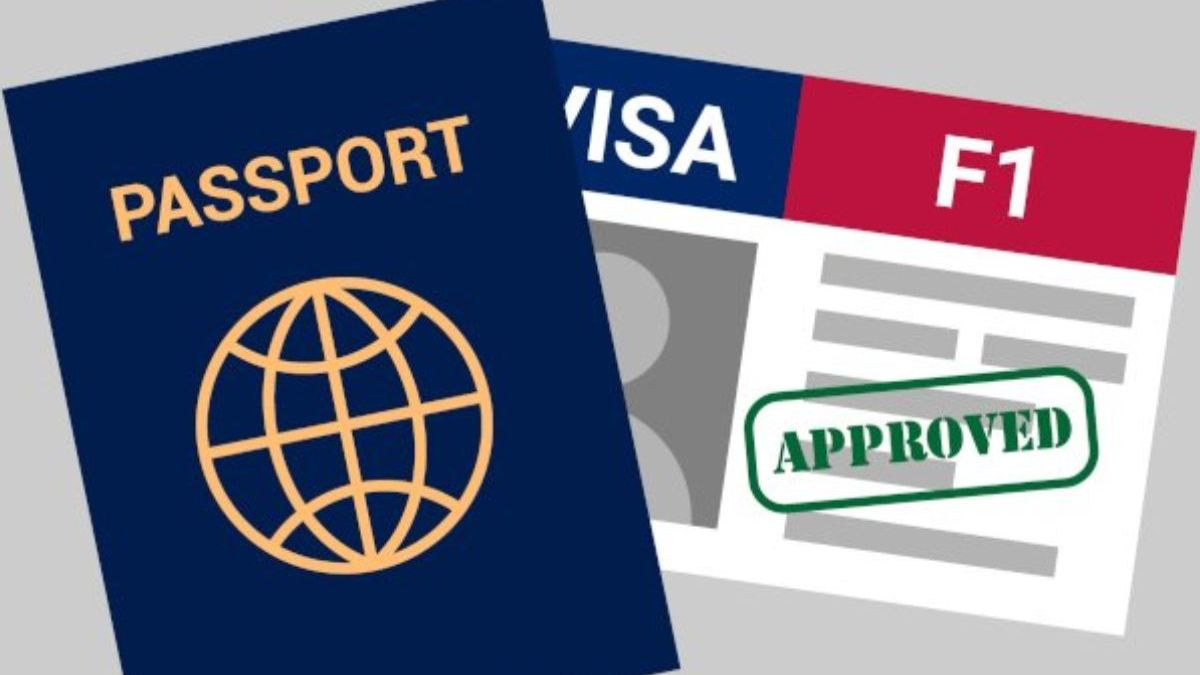
Admission from a qualifying U.S. institution is a prerequisite for the student to apply for the visa. Once admitted, the school issues the student the necessary Form I-20, which is an integral component of the student’s visa application and immigration documentation.

F1 Visa Eligibility
The first significant requirement is to be admitted to an eligible educational institution in the United States. It is important that students have a real academic reason for wanting to attend and will have prepared to justify their choice of university and study destination, as well as the course and subject area.
The applicant is also required to meet the academic and financial requirements. They should make it clear in their documents and answers to questions in the interview that they are ready for the programme that has been proposed and have a viable plan for financing their education and living costs.
F1 Visa Requirements 2026
The key F1 Student Visa Requirements are as follows: university acceptance, Form I-20, valid passport, DS-160 application, and academic and financial documentation. Students are advised to review the conditions for their specific situation prior to booking their visa appointment.
Financial preparation is especially important. Applicants should be able to demonstrate that they have sufficient resources to meet the expected costs associated with their studies. This figure may be different based on the programme and the estimated cost of living by institution.
F1 Visa Requirements at a Glance
| Requirement | Purpose |
|---|---|
| University Admission | Confirms acceptance into an eligible programme |
| Form I-20 | Confirms student and programme information |
| Valid Passport | Establishes identity and travel eligibility |
| DS-160 | Required nonimmigrant visa application |
| Financial Evidence | Shows ability to support study and living costs |
| Academic Records | Supports previous educational qualifications |
| Visa Interview | Allows the application to be assessed |
Documents Required
The documents needed for the F-1 visa may vary depending on the circumstances of the student and the instructions given by the school or the U.S. consular office. Applicants are expected to have their passport, Form I-20, DS-160 confirmation, and academic documents available in general.
Other relevant documents may also be needed, such as financial records. Students need to ensure consistency of names, dates, programme information, and other relevant information throughout paperwork. Having documents organized could also help with interview preparation.
Financial Requirements
The Student Visa Financial Requirements are a crucial step in the process of obtaining an F-1 visa. Students should be able to show they can afford the expenses of their studies and remain in the U.S.
Financial evidence can range from bank statements, scholarship information, education loans, to sponsorship documents, depending on the student’s situation. Students should review how much money they have to spend against the estimated costs of attendance from their college or university.
Application Process
Typically, the F-1 visa application process starts once the student has been admitted to an eligible U.S. institution. Once the student has finished the necessary procedures at the university, he or she will be issued a Form I-20 and then be able to move on to the visa application process.
The applicant, after filling out the DS-160, pays the required fee and proceeds to the appointment as directed. Students should consult the most up-to-date instructions before making an appointment, as the visa process and the availability of appointment dates may change.
Interview Requirements
The F-1 visa interview is a crucial step in the application procedure. Pupils should be prepared to describe their previous education, their chosen programme, the university they are attending, and why they have chosen to study in the United States.
Future plans and funding can also be a question. Applicants should be natural and candid in their response instead of reciting memorised responses. Their answers should be the same as what they have written in their application and supporting documents.
New F1 Visa Rules 2026
Applicants for 2026 should be aware of any changes to immigration and student visa requirements in the United States. New policies can impact processing or status retention of applications.
Candidates are not permitted to rely on information from previous visa guides or social media posts. Before making a decision, the most current official U.S. government, embassy/consulate, or institution instructions should be examined.
September 15, 2026 Changes
Students who had applied or had a study plan under updated rules may be interested in the Changes on September 15, 2026. Students should be aware of any changes to their visa application, the period of admission and/or their student status.
The situation may differ depending on each applicant, and applicants should never assume the same rules are applicable to all students – they should check the rules that apply to them. International student offices at universities can also offer advice regarding any procedures that may apply.
Impact on Indian Students & Benefits for Indian Students
Indian students are an important part of the international student population in the United States, so changes to F-1 visa procedures can have a direct impact on students applying from India. Early preparation can give applicants more time to organise documents, arrange financial evidence and prepare for the interview.
A well-prepared application can also help students explain their academic plans clearly. Understanding the university, course structure, funding arrangements and future plans allows students to provide consistent answers during the visa process.
F1 Visa Costs
The F1 visa cost in 2026 is not limited to the visa application charge. Students should also consider the broader expenses associated with studying in the United States, including tuition, accommodation, food, transportation, insurance, and travel.
The actual cost can vary substantially between universities and programmes. Before applying, students should review their institution’s estimated cost of attendance and create a realistic budget for the complete duration of their studies.
| Cost Category | Expenses to Consider |
|---|---|
| Visa Charges | Applicable student visa fees |
| Tuition | University or programme fees |
| Accommodation | Campus or private housing |
| Living Costs | Food, transport and personal expenses |
| Insurance | Required health or student coverage |
| Travel | Flights and related travel expenses |
Common Rejection Reasons
If the applicant does not submit all or accurate information for an F-1 visa application, it may be challenging. If there is weak financial evidence, unclear academic plans, missing documents, or answers that do not match the application, it can lead to concerns during the Visa Assessment.
Applicants are also not to give false or misleading information. Finally, the following aspects of a strong application are important: Preparing genuine documents; Understanding the selected programme and university; Organising financial evidence; Answering interview questions honestly.
FAQs
Q1. So what is an F-1 student visa?
It enables qualified foreign students to learn in America.
Q2. Who should apply for an F-1 visa?
A valid student visa is normally required for students from overseas who are studying a qualifying full-time course.
Q3. Do F-1 students need to complete Form I-20?
Yes, students who are eligible will be issued a Form I-20 by their institution.
Q4. Should there be financial proof for F-1 students?
Typically, applicants will be asked to provide documentation for their educational costs.
Q5. Are you an Indian student and do you require an F-1 visa?
Qualifying studies normally require F-1 status for Indian students.
Q6. Will an F-1 visa interview be necessary?
Interview requirements will be as directed by applicants by the current instructions of the consular.
Q7. What documents are needed for an F-1 visa?
Typically, a passport, Form I-20, and DS-160 are required.
Q8. How much does an F-1 visa cost?
All costs are included, such as visa fees and education-related costs.
Q9. Are there any plans to alter F-1 rules in 2026?
Yes, immigration policies and procedures may change throughout the year.
Q10. When to begin preparation?
Students must start preparations at least prior to the date of intended study.
Disclaimer: This article is for general information only. Immigration procedures and requirements, visa requirements, immigration regulations, and immigration fees in the United States may change, and individual requirements may vary. Please check with the latest information from official U.S. government sources, the U.S. embassy or consulate, and your educational institution before making immigration or education-related decisions.
Also read:
Cyprus Student Visa 2026: Requirements, Fees, Process and Eligibility Guide
CTET 2026 Exam Postponed, Applications Extended Until September 1
RRVUNL Recruitment 2026: 2,005 Vacancies, Apply Before August 31

My name is Santosh Rana, and I am the Founder and Content Writer at Taza News, where I actively cover Education, Board Exam Results, Admit Cards, Government Jobs, Technology, and Breaking News updates. As the founder of the platform, I am committed to building a trusted digital news source that delivers accurate, timely, and reader-friendly information to audiences across India.